
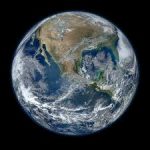
 The planet is seriously ill. This is no news for the readers of this blog – they all know this. But what many of us don’t realize – the planet that is we. We are part of the planet, Gaia, the total ecosystem. We are cells of one of its organs: humanity. So we are ill, but we, the majority in the Western World, don’t feel sick. That reminds me of the days I had cancer. I didn’t feel sick at all, but was very ill, even in mortal danger. So it is with us: we are dangerously ill, but don’t feel it. Furthermore, if we think about the illness of the planet we take the symptoms – ecological collapse, extinction of species, pollution, global warming, violence, the market, gun-addiction, etc. – for the illness itself. But that is not the illness. So we need a more holistic thinking, and then we can see what the illness is. It is, as many guides, including our inner guide, tell us, a lack of awareness in the human race. In think this awareness was greater in the seventies, when we talked about ‘healing the planet’. Nowadays one hardly hears that expression anymore.
When you are ill you are going looking for a cure, or a healer that can provide that cure. Some illnesses are so serious, that effective cures or healers are difficult to find. But, if we want to live, that doesn’t stop us from searching. Even if we are successful in finding the healer however, that doesn’t release us from our own responsibility for our healing process. We have to cooperate with the healer, and with our own mind and body.
And that is what we should do as humanity: looking for ways to heal the planet, including ourselves. That is partly an individual process: developing our own awareness: becoming conscious of what is going on in ourselves and the world around us. But is also a collective process: developing our collective consciousness. That is hardly possible without medicine men or women. In the collective field we call these guides or leaders.
In 1998 I published Spiritueel Leiderschap, my magnum opus, translated in English as Spiritual Leadership, Wisdom for Work, Wisdom for Life.*) That opens with the following sentences: ‘There is a harrowing lack of leadership in the world. Is this the way you see it too?’ That book already then dealt with the kind of leadership we need in this world. Next month (around the first of April) I’ll say something about that kind of leadership or guidance. In the meantime I invite you to think about that yourself: what is the kind of leadership we need, and how do we find this?
*https://www.amazon.com/Spiritual-Leadership-Wisdom-Work-Life/dp/1931044880
Disclaimer: I apologize for mistakes in my English. Blogs are cursory – not stuff for correction by a native speaker

 Wie echt wil weten hoe het er met de wereld voorstaat leze The Uninhabitable Earth van David Wallace-Wells uit New York Magazine. **) Als u dat doet moet u wel doorlezen tot het eind, anders eindigt u in een depressie. De laatste alinea biedt nog enige hoop.
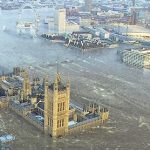 Wat is beter – deze ontmoedigende waarheden onder ogen zien, of, zoals onze leiders en hun medewerkers doen, leven in een illusionaire wereld? Per slot van rekening komt de zondvloed pas na ons.
 Coming back from holiday I attended the Holland Festival Proms. This was a wonderful day all over, but the highlight certainly was The Nile Project. A group of about 14 musicians who with their love, vitality and african music ravished the public. With their laments they touched everyone deeply, and one couldn’t stop moving and dancing when they played their exciting rhythms.
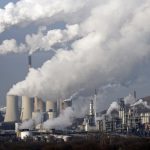 In De Groene Amsterdammer van vorige week las ik dat de tien bedrijven in Nederland die de grootste bijdrage leveren aan de CO2 uitstoot in feite nog geen wezenlijke stappen hebben gezet om die uitstoor te verminderen, en ook niet voornemens zijn dat binnen afzienbare tijd te doen. De uistoot is nog even groot als tien jaar geleden. Van de energietransitie waarover in Nederland sprake is komt zodoende natuurlijk niets terecht. Het is dus niet alleen de overheid die in gebreke blijft.
 Als we dusdoende ons geloof in de transcendente wereld, in de mogelijkheid van wonderen en een leefbare toekomst (zie mijn vorige blog), en zachtmoedigheid hebben ontwikkeld zijn we klaar om hulp te vragen aan de wezens in de ‘subtle realms’. We doen dit in gebed. Velen van ons zijn niet gewend te bidden – daarom ga ik daar in een volgend blog op in. Maar nu al vast dit: we kunnen niet verwachten dat onze partners in de ‘subtle worlds’ dit eventjes voor ons gaan oplossen. We moeten zelf ook een substantieel aandeel leveren. Wat en hoe? Ook daarover kom ik later te spreken.
 Een van de eerste voorwaarden voor een effectief verzoek om hulp is dat we in de mogelijkheid daarvan moeten geloven. Geloven we in een transcendente wereld van waaruit ons hulp kan worden geboden? Voor velen van ons is dat pure fantasie, wensdenken. Anderen, die de mogelijkheid van het bestaan van een transcendente wereld niet uitsluiten worden niettemin geplaagd door twijfel: bestaat die wereld wel, en bekommeren de wezens daar zich ons om ons lot? Zelfs diegenen die gelovig of godsdienstig zijn kennen die twijfel: geloof zonder twijfel is per definitie onmogelijk (wat niet betekent dat gelovigen zich steeds van die twijfel bewust zijn).