
 Demagogic leaders, like Donald Trump, are exploiters of fear and anger. The way they do it is outlining a doom scenario and then asserting that they have (or are) the solution. It is exactly what Donal Trump did in his acceptance speech at the Republican Convention, and is doing ever since. It is a well-tried selling technique: telling you have a problem and I have the solution.
This technique is very effective because there is a lot of fear and anger in the society. Fear of the unknown, of the stranger, fear to loose everything what we now have (even if this is very little), and anger about others who have what we don’t have (and are in a seemingly safe position).
How can we defend ourselves against these practices? First of all it is necessary that we realize that there is fear and anger in ourselves. Suppressing it doesn’t help, on the contrary, then it is becoming stronger and can erupt as panic, resentment, rage of even violence. If we can accept that we too are afraid every now and then, it is is easier to take a stand against the threats.
It also helps when we realize that all fears and angers are connected to the fear of death. That too is the fear to lose everything, the fear of the unknown (does hell exist?), and, when the proceeds of dying is beginning, the envy that others are still safe and sound. So the deepest and most effective way to confront our fears is to confront our fear of death. Some people are fighting against the fear of death by believing that there is life after death, and that this is proven by near death experiences (NDE’s). But that is esoteric truth, that only is completely convincing for those who had these experiences themselves. Moreover, NDE’s don’t prove that there is a life after death – they only prove that there is infinite non-local consciousness*.
So we have to learn to live with the uncertainties of life and death. We have to learn to accept the unacceptable. This is the highest art of living. We can train it by staying aware of our fears, staying with it, enjoy the moment, and at the same time doing what Michelle Obama said: “When they go low, we go high.” It is developing courage, the force of the heart.
And then, when we are developing courage, we can radiate it out, especially to them who are not as privileged as we are. This, as far as I am concerned, is the way we in the end shall defeat populism and racism. Attractive perspective? The key to this is lying in your own heart.
- Pim van Lommel; ‘Consciousness beyond Life. The Science of the Near-Death Experience‘. Harper Collins, New York, 2010.
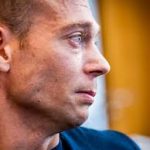 Keren we terug naar het wegsturen van Yuri van Gelder. Mijn gesprekspartner bij de lunch was van mening dat Van Gelder nooit had mogen worden weggestuurd. Hij is iemand die één ding in zijn leven heel goed kan (hij was in de finales geplaatst als de achtste van de wereld), en dat moet je hem dan ook laten doen. Desnoods geef je hem achteraf op zijn falie, of een straf (boete) maar je mag iemand niet zo in zijn mogelijkheden beperken. Bovendien, als je weet dat hij makkelijk te verleiden is (en dat kon je bij Van Gelder heel goed weten), laat je hem niet ’s avonds alleen weggaan. Je gaat als coach zelf mee, of laat iemand anders, een vertrouwd iemand, met hem meegaan (dat laatste was ik overigens met mijn tafelgenoot eens).
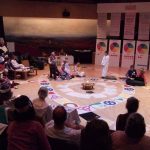 A few weeks ago I participated in a planetary game in Findhorn, Scotland. As many of you may know, the Findhorn Foundation community is an experiment in conscious living, a learning centre and an ecovillage (see
  Zou het leiderschap dat we nodig hebben uit Europa of zelfs Nederland kunnen komen?
 An utopia? Or a feasible vision, an alternative to the collapse of the present feverish world? Maybe the world that we’ve painted is not your ideal world, but there’s nothing to stop you from dreaming your own dream.
 Afgezien van de weerzinwekkende toon waarop het debat werd gevoerd, werden de campagnes gekenmerkt door doemscenario’s, zowel bij de voorstanders van blijven als bij de voorstanders van Brexit. Wat ik heb gemist is een visie, een wenkend perspectief op een toekomst die het waard is om voor te gaan. Aan de blijven-kant was het enige argument economische groei* en meer van hetzelfde neo- liberale, hardvochtige en uit de hand gelopen kapitalisme en globalisme, en aan de Brexit kant een nostalgisch terugverlangen naar het oude ‘Britannia, rule the waves’ (een lied uit 1740!), waarbij men tegelijkertijd een knus en raszuiver eigen volk zou beschermen door vreemdelingen te weren (De Engelsen hebben een lange traditie van discriminatie, tegenover Indiërs en Joden bijvoorbeeld, al liep het nooit zo uit de hand als bijvoorbeeld in Polen en Duitsland). Zou je deze weinig aantrekkelijke alternatieven met enige moeite nog als positief kunnen kenschetsen, in de campagnes lag de nadruk op de rampen die Engeland zouden treffen als de andere kamp zijn zin zou krijgen.
 Ik associeer zachtmoedigheid met openheid: open staan voor de ander (iedere ander!), voor leed en schoonheid. En met flexibiliteit: ik zie niet hoe je tegelijkertijd zachtmoedig en onbuigzaam kan zijn. En ook met moed: de moed om zacht en kwetsbaar te zijn in een harde wereld. Ik vind het een eigenschap die enigszins vrouwelijk aandoet, meer yin dan yang. Niet dat een zachtmoedige leider niet ook manmoedig kan zijn: doortastend, zijn nek uitstekend. Sterker nog – dat moet hij/zij op zijn tijd wel zijn, wil zij/hij effectief zijn. Maar daarachter schuilt altijd een zekere mildheid. De eigenschappen zachtmoedigheid en manmoedigheid komen natuurlijk zowel bij mannen als vrouwen voor en zijn beide een voorwaarde voor effectief, creatief en constructief leiderschap.



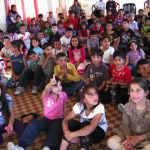 Flowers School voor vredesonderwijs. (Terzijde: als u meer wilt weten over dit prachtige project dan adviseer ik u naar de website te gaan: