Categoriearchief: Ecologie

ECONOMISCHE GROEI KAN NIET MEER.

Nadat ik het eerst vluchtig had doorgekeken heb ik nu het boek van Naomi Klein – This Changes Everything, Nederlands: No Time – eens grondig doorgelezen. Zeer goed geschreven, goed gedocumenteerd, en derhalve zeer overtuigend. Zij laat zien dat we in moordend tempo afkoersen op een ecologische ramp van onvoorstelbare omvang. De nog steeds eenzijdige gerichtheid op economische groei en de ideologie van de vrije markt hebben dat als noodzakelijk gevolg. Goedkope arbeid in China en andere landen, de onbeperkte beschikbaarheid van fossiele brandstoffen, en ons wereldhandelssysteem (handelsverdragen) dragen daar eveneens toe bij. (In verband met dit laatste: het bijna afsluiten van een nieuw handelsverdrag tussen Europa en Amerika, het TTIP, vormt wat dit betreft een sluitstuk, en zal waarschijnlijk de democratische bevoegdheden van regeringen, bijvoorbeeld om ecologische maatregelen die hout snijden te nemen, verder uithollen. Zie bijvoorbeeld Bas Eickhout in NRC/Handelsblad, 9 februari 2015). Op één punt wijkt mijn mening af van die van Klein: zij denkt dat we de opwarming nog binnen de grens van 2 graden kunnen houden, als we nu massaal zouden handelen. Afgezien van het feit dat dit niet zal gebeuren lijkt me dat al een gepasseerd station. Reeds in 2008 stelde Jan Paul van Soest op goede gronden dat een opwarming tot 4 graden veel waarschijnlijker zou zijn. Intussen lijkt dat vrijwel zeker, en gaat het dus meer om de vraag of we binnen de vier graden blijven of niet, en misschien wel om heel andere vragen.  Klein draagt daarmee bij tot de mythes die zij zegt juist te willen bestrijden.

Ze laat zien dat we het voor de oplossingen niet moeten hebben van onze politieke en zakelijke leiders. In tegendeel. Door de mythe dat (duurzame) economische groei samen kan gaan met de oplossing van het klimaat probleem dragen ze niet bij tot de duurzaamheid van deze wereld maar verergeren ze de probleem juist. Een goed voorbeeld daarvan treffen we in NRC/Handelsblad van 28 januari – Red het klimaat en de economie. In dit artikel betogen Andrew Steer (World Resources Institute) en Chad Holliday (Commissaris bij Shell) dat er maatregelen mogelijk zijn die zowel de economische groei bevorderen als het klimaatprobleem oplossen. Hoewel hun voorstellen op zichzelf niet onzinnig zijn, is hun conclusie volstrekte onzin. Dat weten ze zelf natuurlijk ook wel (of niet?). Hoe dom kun je zijn – of is dit gewoon kwade trouw?

Ook van onze mecenassen, de Bill Gatesen en de Richard Bransons van deze wereld, moeten we het niet hebben, evenmin als van een deel van de Milieubeweging of de groene politieke partijen.  Zij allen gaan uit van de zojuist omschreven misvatting. Te onzent zien we dat recentelijk weer bij de plannen voor een gasboring op en bij Terschelling, plannen  die gesteund worden door milieuactivist Wouter van Dieren. De man lijkt zelf wel een fossiel geworden. Hij is in elk geval niet erg met zijn tijd mee gegaan.

ECONOMISCHE GROEI KAN NIET MEER. ECONOMISCHE GROEI KAN NIET MEER. ECONOMISCHE GROEI KAN NIET MEER. ECONOMISCHE GROEI KAN NIET MEER. ECONOMISCHE GROEI KAN NIET MEER.

Dit kan niet vaak genoeg gezegd worden. Dat schept natuurlijk wel een gigantisch probleem (naast het ecologische) want hoe kunnen we dan een wereld scheppen waarin iedereen in zekere welstand leeft en een zinvolle bijdrage kan leveren? En hoe kunnen we in een krimpende economie onze democratische rechtstaat behouden? Omdat dit probleem werkelijk heel lastig oplosbaar is wordt het niet benoemd. Dan hoeft er dus ook niet over te worden nagedacht. Sterker nog, alle politici overal te wereld blijven streven naar economische groei.

Natuurlijk is een bloeiende economie denkbaar die zowel het wereldwijde armoede vraagstuk als het klimaatprobleem oplost. Dan moeten we denken aan een circulaire economie, die ALLE grondstoffen hergebruikt (cradle to cradle) en geheel draait op duurzame energiebronnen (wind, zon en water). Maar daar zijn we zowel technisch als economisch nog lang niet, en om daar te komen zijn enorme investeringen nodig. Die dragen op zichzelf nog geruime tijd bij aan het klimaatprobleem en vragen grote opofferingen. Niettemin moet dat toch gebeuren – en dat betekent dat de rest van de economie nog verder moet krimpen. We zullen er niet komen zonder desinvesteringen.

Kortom, we zitten vast. Wat nu? Daarover de volgende keer.



Do we have to stay in the shade, hidden and secure? Conclusion.

I started this little weblog series with the question that is in the heading of this blog. I asked myself this question due to the New Story Summit in Findhorn, organized with the purpose of finding guidelines for the future. At a certain moment the participants seemed to have arrived at an impasse in which they didn’t dare to stay as long as was needed. Instead they cheered themselves up with reassuring and comforting talk. But the I Tjing gave a different answer – see the first blog in this series  (October 3). In short: it said to do nothing. Quote: The accepted date has gone by. Let it go. It said more, but in order to fully experience the depth of the reading I advise you to read the original text again in the mentioned blog.

This caused in me a complete trend of thoughts and contemplations about which I testified in the last few blogs. I now am reaching a preliminary conclusion. Here it is.

The first thing we could do is is, indeed, do nothing. Standing still,  so that  our soul can catch up with us. Being as aware as we possibly can be. Being conscious of what is going on inside and outside. Reading books about it. Being aware not only  of what is going wrong, but also of the beauty that is always present inside and around us. And, very important: developing an image of the world we long for. This is completely in line with the I Tjing reading.

The second thing we could do is change our lifestyle. We can try to diminish our ecological footprint. We can choose our food more consciously and responsibly (hardly any meat, food from the neighborhood and of the season, and so on). We can diminish flying and car driving, and going by foot, bicycle or train instead.  We can save energy by house isolation, turning the heating lower and buying led lamps and energy saving devices. In one of the earlier blogs I said that these life style changes will not make a big difference in the outside world, but it will influence our attitude.

Three: we should protest to everything that is harmful in this world. We can do this in several ways. In our consumer behavior: refusing to buy things that are produced in a socially or ecologically  damaging way, and , in general, restricting the amount of things we buy. In our political behavior: voting for or joining or being active in the party that most endorse our ideals. Joining protest groups or NGO’s that resist irresponsible policies, like for instance Greenpeace or Avaaz. Participating in demonstrations for world peace or a global climate policy, or against irresponsible profit making on a global or on a local scale (mining in a vulnerable nature area, shale gas extraction, destroying the rain forest, whatever). The  least we can do is raising our voice in speaking and writing and signing petitions. We have to stir the soup, all, together.

Four, we should create beauty. Being active in the world to give what it is we have to give, with love. The world then will become dear to us, and that will lead to more creativity. This is a constructive force opposing the destructive forces.

Five, we should pray. We cannot solve the enormous problems that lay ahead of us alone. We need help form the subtle world. And we certainly will get that, if we are willing to listen and be open and flexible, and prepared for change

None of these ‘actions’ will solve the climate problem That cannot be solved anymore, therefore it is too late. But we can move to a future in which we not only can survive, but have a more dignified world than the one we have now. However we are not perfect (yet) and thus we shall live by compromise. That is OK, as long as we are aware of that.

Let me end this blog with a quote for one of the participants in the Findhorn New Story Summit.

Travelling home through the rolling hills and magnificent skies of Northern Scotland, I wonder at our dilemma. We need to go beyond ourselves, and yet we behave as if we have only ourselves with which to get there. It was good to gather on this summit, to know ourselves and know our limits. Perhaps we were reminded of our smallness and our tendency to subtle forms of hubris. And some of us at least, were driven – in the face of paradox and few other options – back to the simple practice of prayer and remembrance – of turning to something bigger than we are and confessing, “We don’t know”. (Justine Huxley’s blog)

And finally: about myself. For me, in this phase of my ilife, my emphasis is upon the items one and five. If  that leads to further action in the other realms remains to be seen. I’ll go with the flow and bless you all with courage, resilience and joy. So be it.

(I apologize for mistakes in my English. Blogs are cursory – not stuff for correction by a native speaker).


Do we have to stay in the shade, hidden and secure? Part IV

While I am wrestling with what I should do or not do with regard to global warming,  the world goes on revolving. Some remarkable things happened.

Our so called ‘objective’ Centraal Plan Bureau (CPB: our government  Bureau for Economic Policy Analysis) published a report in which it is said that the development of wind energy will cost the Dutch  society 5 billion more than it will bring. This  analysis however is based on completely out of date arguments and assumptions. This brought Jan Paul van Soest (a renowned consultant in Holland) to the following remarks: “The CPB in this case is engaging in politics. Economists especially are good at disguising normative statements about the world as objective statements. Maybe they don’t even realize that they in this case are doing just that.”  (Groene Amsterdammer, 16/10). As far as I am concerned they may choose, either they are stupid or they act in bad faith. I suspect the latter.

Another so called ‘objective’ gorvernmental institution, the Authority for Consumers & Markets (ACM) decided to investigate if our shrimp fisherman have made illegal agreements. The fishermen decided to limit their sailing frequency, to prevent the emptying of the sea. But this is against the free market principle. That principle is of course more important than ecological considerations.

The European Union in the mean time reached a climate agreement that is a weak decoction of the proposal of the Committee of January 2014, that already was characterized as too late and too little. Actually this agreement can be considered as business as usual: let’s heat the world up. This decision was supported by the Dutch parliament, especially by the liberal member Leegte (This means Emptiness in English. What’s in a name?)

So far the actions of our government institutions and our politicians. For their work I pay taxes. I WANT MY MONEY BACK! But I don’t know how to accomplish that. Anyway, these events are all good illustrations of what Naomi Klein is describing in her new book: This changes everything.

These things make me angry, but still I don’t know how to respond. My investigation continues!


(I apologize for mistakes in my English. Blogs are cursory – not stuff for correction by a native speaker).


Do we have to stay in the shade, hidden and secure? Part II

In her new book (This changes everything) Naomi Klein convincingly argues that we are rapidly moving towards a global warming of 4 degrees centigrade or more. Read her book if you want to know what this means (or our book Earth Fever, 2009, page 53, except that in the mean time the process that is described there seems to have accelerated). Our governments and the corporate world are doing virtually nothing about it. For instance: In january 2014 the European Commission proposed to reduce the ambition to bring down the CO2 emissions (an ambition that was already too little and too late) , and our (Dutch) government is supporting this proposal. In our parliament a resolution from the opposition to oppose this proposal of the Commision was rejected, because our Labour Party, being part of the government, voted with the majority  and thus renounced her own principles (this fact was not reported in the media, as far as I know. Clearly this fact was not considered relevant).

The case of our Labour Party is an interesting one. Their leader, Diederik Samson, once was an activist in Greenpeace, and in their election program the party emphasized ecological targets . But in their coalition with the liberals they had to let go of most of their ambition. Nevertheless, under their influence the government stimulated a so called energy-agreement between most involved organizations,  that according to experts is insufficient to contribute drastically to our own emission targets. Even so, the targets of the agreement will probably not be met. To save their image the Labour Party now demands drastic measures to bend this process. My prediction is that nothing will happen, only minor changes maybe, so that the Labour Party can save her face. Poor labour party, low as they are standing in the polls, nothing on the short term can save them. If they really are going for a drastic climate policy, they will cause the fall of the government, and lose in the elections. If they back down, they will lose in the elections too.

The above cases can effortlessly be supplemented with other cases in our own country, in Europe or in other countries. I invite you to find them for yourselves. It all underlines my proposition that our leaders will not solve our climate problems. To be honest, it is indeed very difficult for them to do something essential, because our complete economical system is obstructing any climate policy. The WTO (world trade agreement), the free market ideology, the financial system and the globalization make any drastic measure against global warming nearly impossible. (Again: read Naomi Klein, to learn why this is so)

So what to do? I am in the process of finding out. I will share this process with you in the coming blogs (maybe now and then interrupted by other themes). To be continued.


(I apologize for mistakes in my English. Blogs are cursory – not stuff for correction by a native speaker).


Do we have to stay in the shade, hidden and secure?

In the Findhorn Community the New Story Summit just happened. It  tried to find answers to the chaotic and almost hopeless situation in which humankind is involved. I wasn’t there but followed it more or less through the New Story Community. The story that for me stood out most was the I Ching interpretation  by Charles Taylor. Here it is:

Here is the I Ching reading for the Summit. As I understand it, this reading operates at three levels: individual, the Summit itself and this phase in the life of the world and the cosmos (The Great Turning):

54: Converting the Maiden
You must go through a transformation that is beyond your control. In the end it will reveal your hidden potential and open a whole new field of activity. 
This is now under way, but you can do nothing about it.Trying to impose order, or to leave the situation, would close the way. This transformation reflects a deep, perhaps unacknowledged need. Be receptive and adaptable. Act through the woman and the yin. This process is both an end and a new beginning. If Heaven and Earth did not mingle like this, the myriad beings would never emerge.
Converting the Maiden means a woman’s completion.
Look at things from an independent perspective. If you stay in the shade, hidden and secure, this will bring profit and insight.
The accepted date has gone by. Let it go. Draw things out. This procrastination will lead to the right time to act. A significant connection is approaching.

Now turning to the future (how things will resolve):
24. Returning
This is a time of rebirth and returning energy after a difficult time. Go back to meet this new energy in order to begin anew. This will bring success. Return to the Source.
Let things emerge without pressure. Heaven is moving here. In returning, you see the heart of Heaven and Earth.

Now this seems to be a plea for no action. This is completely the opposite of what Naomi Klein  is advocating in her new book: ‘This changes everything’ (a must read). In  my next blog I’ll come back to that and share my own choice.


Is het glas nu half leeg of half vol?

Zondag een week geleden demonstreerden er wereldwijd 645.000 mensen voor een radicaal klimaatbeleid. De organisatoren (Avaaz en diverse milieuorganisaties) waren daar zeer blij mee en zonden een mail rond waaruit euforie sprak: we komen massaal in beweging. Ik ben een notoire zwartkijker en kon die euforie niet delen. In de eerste plaats was het doel (1 miljoen demonstranten) niet gehaald, en in de tweede plaats heeft een dergelijke demonstratie mijns inziens niet veel direct effect (al refereerde Obama er wel aan in zijn speech op de eendaagse klimaatconferentie van de VN). In New York demonstreerden 300.000 mensen (volgens de organisatie 400.000), het doel was geweest een half miljoen. Maar bovendien: als je het aantal potentiële demonstranten in New York schat op 5-10 miljoen, kun  je ook zeggen dat er miljoenen NIET gedemonstreerd hebben. Die kan het kennelijk allemaal niet zoveel schelen, of ze zijn slecht geïnformeerd.

Het aantal in New York stak echter nog gunstig af bij het aantal in Amsterdam. De Nederlandse organisatoren stelden dat er in heel Nederland 5000 mensen gedemonstreerd hadden. Ik denk dat er daarvan naar schatting 3000 in Amsterdam demonstreerden. Als je dat vergelijkt met New York hadden dat er 30.000 tot 60.000 moeten zijn. Toen ik zelf meeliep en alle mensen op terrasjes zag zitten, die het wel een interessante voorstelling vonden in plaats van zelf mee te lopen, werd ik daar niet vrolijk van. Maar ook de Nederlandse organisatie (Avaaz, Urgenda) verkeerde in een staat van euforie.

Diezelfde dag was er wereldwijd het MasterPeace concert. 53 concerten in meer dan 40 landen. In Amsterdam woonden 7000 mensen dat concert bij. Ook dat leidde tot een staat van euforie. Het was ook prachtig om te zien hoe tegenstanders uit diverse conflictgebieden samen muziek maakten als een pleidooi voor vrede. Maar ook hierbij heb ik een kanttekening. Vergeleken met de oorspronkelijke doel van MasterPeace: een magistraal muziek- en dansfeest bij de piramiden van Egypte, met wereldwijde mediacoverage, is de impact van dit festijn beperkt. Al moet bedacht worden dat er in meer dan 50 landen wel kernen van MasterPeace zijn gevormd die strijden voor de vrede. Anderzijds: in Israël en Palestina bestaan die kernen nu al 65 jaar. Veel effect heeft dat niet (behalve bij enkele individuen).

Ik vind het dus geen tijd voor euforie, ook al  kun je er voor kiezen om op bescheiden schaal je successen te vieren. Maar ik trek uit de bovenstaande overwegingen niet de conclusie dat al die activiteiten zinloos zijn. Ik heb het grootste respect voor de moed en de veerkracht van de initiatiefnemers, die tegen de verdrukking in hun idealen vorm geven.  Die volhouden bij tegenslag, en dan een resultaat bereiken dat weliswaar niet helemaal gelijk is aan hun dromen, maar niettemin indrukwekkend. Zij zijn een voorbeeld voor ons allen.

En ik mag dan niet in een staat van euforie verkeren, ik ben ook niet somber. Ik houd me maar vast aan de gelijkenis van de zaaier. Hier volgt een verkorte versie :

Een zaaier ging uit om te zaaien. En toen hij zaaide viel een deel bij de weg, en de vogels kwamen en aten het op. En een ander deel viel op het steenachtige, waar het niet veel aarde had, en toen de zon opkwam verdorde het, omdat het niet veel wortel had. En een ander deel viel tussen de doornen; en de doornen groeiden op en verstikten het. Maar een ander deel viel in goede aarde, en gaf vrucht. Het één honderdvoud, het ander zestigvoud en het ander dertigvoud. Wie oren heeft die hore.

Wie weet wat er volgend jaar zal gebeuren – bij de grote klimaat conferentie in Parijs. We zullen zien. En wat MasterPeace betreft, wat nog niet is kan komen.

Het kan zondag een mooie dag worden.

In hun wijsheid hebben de organisatoren van de climate marches wereldwijd besloten dat te doen op de Dag van de Vrede, a.s. zondag, daarmee alle vredesdemonstraties in de wielen rijdend. Ik zou het zelf zo niet bedacht hebben. Uiteindelijk zijn het vaak dezelfde mensen die zich zorgen maken over het geweld in de wereld, en die zich zorgen maken over het ontbreken van een radicaal klimaatbeleid. Maar hoe bewust deze mensen ook mogen zijn, ze hebben nog niet de gave van de bilocatie verworven.

Ook voor mij levert dit een dilemma op. Ik ga a.s. Zondag naar MasterPeace in Concert, maar wil ook graag meedoen met de klimaatdemonstratie. Ik los het als volgt op: ik loop eerst mee met de klimaatmars, en dan bij Eye aangekomen, zal ik de metro nemen naar Ziggo Dome. Ik mis dan de bijeenkomst bij Eye, maar daar is niets aan te doen.

Voor de doorzetters onder ons is er ook nog een andere mogelijkheid. Vanaf 16.00 zal er vanaf de Openbare Bibliotheek een klimaatmars plaats vinden naar Ziggo Dome, alwaar men dan kan deelnemen aan MasterPeace in Concert.  De organisatoren van deze mars stellen dat de twee doelen: vrede en ecologisch bewustzijn, wezenlijk aan elkaar gerelateerd zijn, en dat is natuurlijk ook zo.  Door ecologische ontwrichting  ontstaat ziekte en honger, raken mensen ontheemd en wanhopig, en zullen dan eerder geneigd zijn tot geweld. Anderzijds kan een werkelijk radicaal ecologisch beleid alleen maar uitgevoerd worden in een wereld in vrede. Zie de facebookpagina hieronder.

Dus ik roep al mijn lezers op: ga naar allebei: de klimaatdemonstratie en MasterPeace in Concert. Websites:

https://www.wijwillenactie.nl/?page_id=1177

https://masterpeace2014.nl/masterpeace-in-concert/

https://www.facebook.com/events/349139395244384/?ref_dashboard_filter=upcoming


Doemdenkerij?

Een paar mooie berichten:

In navolging van andere reclamebureaus weigert het allergrootste Amerikaans communicatiebureau Edelman opdrachten van organisaties en bedrijven die ontkennen dat de mens de veroorzaker is van van de opwarming van de aarde. Dit is bekend gemaakt door de oprichter persoonlijk. (P+, sept/okt. 2014)

Op de vraag ‘Gelooft u in klimaatverandering?” antwoordt Ben van Beurden, CEO van Shell: “Absoluut! Ik ben geen klimaatscepticus. Ik heb ook kinderen die kritische vragen stellen. Ik denk dat wij als groot energiebedrijf een belangrijke rol te vervullen hebben in de transitie die zich nu voltrekt.” (NRC/Handelsblad, 6/7 september, 2014)

Meesterkok Alain Ducasse, eigenaar van 20 restaurants waaronder drie driesterrenrestaurants, heeft bijna alle vlees in zijn Parijse sterrenrestaurant van het menu afgevoerd. (Chefkok Alain Passard deed dat al eerder, en heeft in de nieuwe formule zijn drie sterren terug). Ducasse: “Onze planeet heeft schaarse hulpbronnen. We moeten dus ethischer en eerlijker gaan consumeren.” (Trouw, 8 september 2014)

Het lijkt dus of onze leiders zich langzamerhand bewust  worden van de ernst van de situatie. Hoe ernstig die situatie is wordt onder meer uiteengezet door Tinkebell in een column in Trouw (2 september 2014).  Ze wordt al jaren beschuldigd van doemdenken. “Noem me een pessimist, of noem het doemdenkerij. (De situatie) serieus nemen zie ik niet alleen als een verantwoordelijkheid voor opkomende generaties, maar ook voor mezelf. Ik ben een realist. De geschetste situatie is allang geen toekomst meer. Als je je kop uit het zand haalt zie je: het is al begonnen.”

Op de column van Tinkebell heb ik een ingezonden brief geschreven die Trouw in verkorte vorm geplaatst heeft: Hier is de oorspronkelijke versie:

Doemdenkerij?

De column van Tinkebell (Opinie, 2 september ) geeft wat mij bij betreft een realistische voorstelling van zaken. Het is feitelijk nog erger dan zij voorstelt, want ze laat hele terreinen van maatschappelijke ontwrichting nog buiten beschouwing: de degradatie van landbouwgrond, de economische crisis die niet is opgelost en weer zal verergeren, het geweld in de wereld en last but not least de bedreiging door epidemieën door het onverantwoord gebruik van antibiotica. En zo voorts en zo verder. De mensheid loopt een existentieel gevaar.

We doen daar eigenlijk niets aan. Het helpt niet om daar de ogen voor te sluiten en de kop in het zand te steken, dat ben ik met Tinkebell eens. Maar het helpt ook niet om daar zoveel aandacht aan te besteden, dat we er allemaal treurig, angstig en woedend van worden, ons machteloos gaan voelen, of vluchten in vermaak of overconsumptie.

Er zijn veel wetenschappelijke aanwijzingen voor de stelling dat we datgene in de wereld creëren waaraan we aandacht geven in ons denken en ons voorstellingsvermogen. Als we te veel aandacht schenken aan wat we niet willen, dan veroorzaken we dat juist. Daarom moeten we daarnaast aandacht schenken aan wat we wel willen: vrede in plaats van oorlog, gezondheid in plaats van ziekte, een wereld waarin respect voor elkaar en de natuur het leidend beginsel zijn in plaats van de uitbuiting daarvan. Het sombere toekomstperspectief dienen we niet te negeren maar te gebruiken als inspiratiebron voor ons verlangen en onze verbeelding. Dan zullen we vanzelf in beweging komen.

Erik van Praag, Amsterdam

En overigens ben ik van mening dat jullie het MasterPeace concert moeten bezoeken: zie: https://www.masterpeace.org

The future belongs to those who believe in the beauty of their dreams.

Unknown“I know not with what weapons World War III will be fought, but World War IV will be fought with sticks and stones.” ― Albert Einstein.

Our economy system is a mess. Inequality in personal wealth is a threat to our democracy and to peace. The unemployment rates all over the world are a threat to our democracy as well. Banks and financial institutions do exactly the same things as before the 2008 financial crisis. (In the London city they are certain that the next crisis is nearby, and this time the governments will not have the money to ‘solve’ it). Economic interests create war all over the place. There is no answer to the question how to grow without aggravating the ecological crisis. There is no agreement among experts about how to solve all these problems. Political parties , left and right, are failing to turn up. We simply DON’T KNOW. In the meantime governments frantically try to promote economic growth to no avail.

Research, both in the US and in the Netherlands show that the vast majority of the well-to-do don’t give a damn. As long als they can accumulate wealth in the short term, more, more, more, they don’t care. This is especially true for the very rich ones (there are exceptions of course). Montesquieu, the great philosopher about the political system and democracy, already said it: ‘Love for democracy is love for equality.’  But in this society another value completely pushes this value of equality aside: the value of absolute freedom, the right to act as one pleases no matter what.

The ecological and  economical problems and the problems of war and peace are all interconnected. No improvement or sustainable progress can be reached in one of these areas separately. What to do?

I think the first step is to make explicit which is the society we want. Not in general terms, but in concrete images and concepts. That we have to do each for him or herself, and then also on a collective level. This issue should be the object of dialog in each school, in each firm, in each political party and in each institution. There should be one or more special think tanks to discuss this matter and to develop a vision. Then the next step should be to develop ideas about how to get there. Then, at last, we probably have assembled enough courage to look at the present situation as it is in all its horror. We then do not have to talk about it anymore in vague, non committing terms, as we do now. And then, probably, we’ll develop the political will to move. Many problems will show itself on our way, but in the end a radiant future then may lie before us.

All big changes of our time started with movements  bottom up: the French revolution, the fall of the Berlin Wall and the Soviet Empire, the fall of the apartheid regime of South Africa, the liberation of India and Pakistan. Then great leaders understood the signs of the time and could pick up and channel the energy of the masses. Something like that could happen today. Big crises could catalyze that process.

Our responsibility is to start each for ourselves. Let’s start today, and develop our vision about the future, and share that with everyone, wherever we come, and whoever we meet. As Eleanor Roosevelt said: “The future belongs to those who believe in the beauty of their dreams.” And John F. Kennedy: “We have come too far, we have sacrificed too much, to disdain the future now”.

By the way: a good way to start is to go to the nearby MasterPeace concert on Peaceday, september 1st. In 40 countries in the world. The Dutch concert is in Ziggo Dome, Amsterdam. See: https://www.masterpeace.org

For this blog I heavily rely on the article of Marcel ten Hooven in NRC/Handelsblad of August 24. 

(I apologize for mistakes in my English. Blogs are cursory – not stuff for correction by a native speaker).


Ongezond verstand

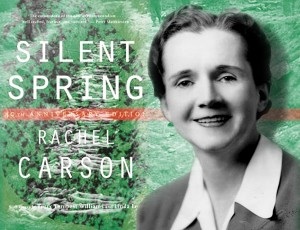
rachelcarsonDit voorjaar was het 50 jaar geleden dat Rachel Carson overleed. Met haar boek ‘Silent Spring’ (1962) heeft ze een immense invloed uitgeoefend op de wereld in het algemeen en de milieubeweging in het bijzonder. Op grond van haar autoriteit is DDT bijna in de hele wereld verboden (geweest) met  honderden miljoenen doden (voornamelijk door malaria en tyfus) als gevolg. En dat terwijl Rachel Carson zelf geen voorstander was voor een totaal verbod op DDT. . .

Je ziet dat wel vaker. Grote denkers zijm meestal aanzienlijk genuanceerder dan hun volgelingen, die in het algemeen het denken overlaten aan hun idool en zelf niet nadenken. Dat lot trof uiteenlopende denkers en wetenschappers als Newton, Adam Smith, Freud, Marx, en nu dus ook weer Rachel Carson.

Wat was haar werkelijke boodschap? Haar werkelijke boodschap was dat we onmiddellijk zouden moeten stoppen met het maar lukraak gebruiken van insecticiden, omdat die stoffen zich dan zouden ophopen in de bodem en in de voedselketen. Ook zou hun werking dan verloren gaan doordat de te bestrijden insecten er resistentie tegen zouden ontwikkelen. Bovendien zouden deze praktijken leiden tot een aanzienlijk verlies van onze biodiversiteit, met alle gevaren voor onze voedselvoorziening en onze gezondheid van dien. En daarin had ze natuurlijk gewoon gelijk.

Overigens is DDT nog een van de minst schadelijke van die insecticiden, en het zou dan ook met verstand en met mate kunnen worden gebruikt (zoals we ook met antibiotica zouden moeten omgaan), gecombineerd met andere bestrijdingsmethoden van malaria. Dat nu doen we echter niet. Nog steeds houden organisaties als het World Wildlife Fund, het Environmental Defense Fund, de Pesticide Action network (PAN, waar in Nederland onder meer  Milieudefensie lid van is) vast aan het volledig stopzetten van DDT. Ook Greenpeace is nog niet volledig door de bocht. Je moet maar durven om al die doden op je geweten te hebben. . . (maar als je niet nadenkt verstoort het ook je geweten niet!)

Anderzijds gaan we rustig door, onder invloed van lobby’s uit de landbouw en vanuit de chemische industrie, met het onverantwoord gebruiken van gifstoffen, zoals legaal als illegaal. Onlangs werden we opgeschrikt doordat het verboden antibioticum furazolidon op grote schaal in het veevoer was terecht gekomen (en overigens werden er toen op economische gronden volstrekt onnodige draconische maatregelen genomen!). En onlangs is bekend geworden dat het overmatig gebruik van neonicotinoïden (waaronder imidacloprid) leidt tot een verarming van de Nederlandse bodem en het oppervlaktewater. Dat heeft weer geleid tot een achteruitgang van de vogelstand – en zal uiteindelijk de voedselproductie bedreigen. Niettemin heeft staatssecretaris Dijksma (PvdA)  in april een motie van de kamer waarin een verbod op deze middelen werd bepleit naast zich neergelegd. Een heel aparte manier om de sterfdag van Rachel Carson te gedenken, moet ik zeggen.

Wanneer zullen onze leiders hun verstand gaan gebruiken, in plaats van zich te laten leiden door de korte termijn en allerlei lobby groepen? Waarschijnlijk zal dat pas gebeuren als wij zelf geleerd hebben ondogmatisch te denken, allerlei ideologieën overboord te zetten, en onze waarheden durven op te geven voor een betere. Uit ervaring weet ik dat dit nog een hele klus is.